
Pest ID Guide
Ticks
Four tick species turn up most often in Southern California yards and on pets. All four can carry disease.
Identification
Small, blood-feeding arachnids that attach to skin. Several species are found across Southern California.
Habitat
Wooded and grassy areas, tall brush, and yards frequented by wildlife or pets.
Why They're A Risk
Several species transmit disease, including Lyme disease and Rocky Mountain spotted fever.
Signs To Watch For
Ticks on pets after outdoor time, bites, and activity in tall grass or brushy yard areas.
Species We Treat
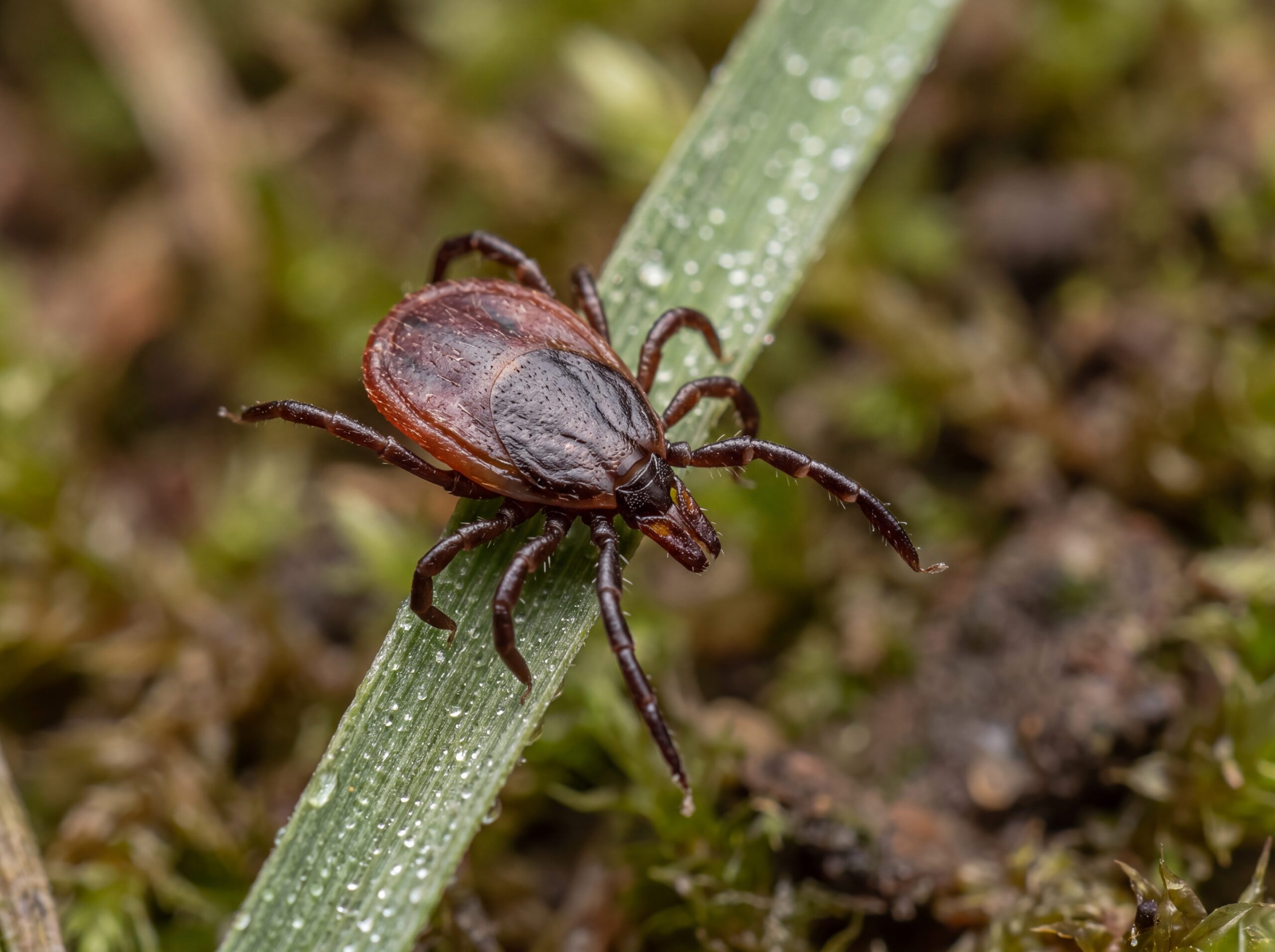
Photo: What Do Ticks Look Like?
What Do Ticks Look Like?
Ticks are part of the spider family, not insects. They range from nearly invisible to about 1/4" and are flat before feeding, turning greyish-white and rounded once engorged. Their bodies have a head, thorax, abdomen, and four pairs of legs. "Hard" ticks have a rigid plate on their back; "soft" ticks have leather-like skin instead.
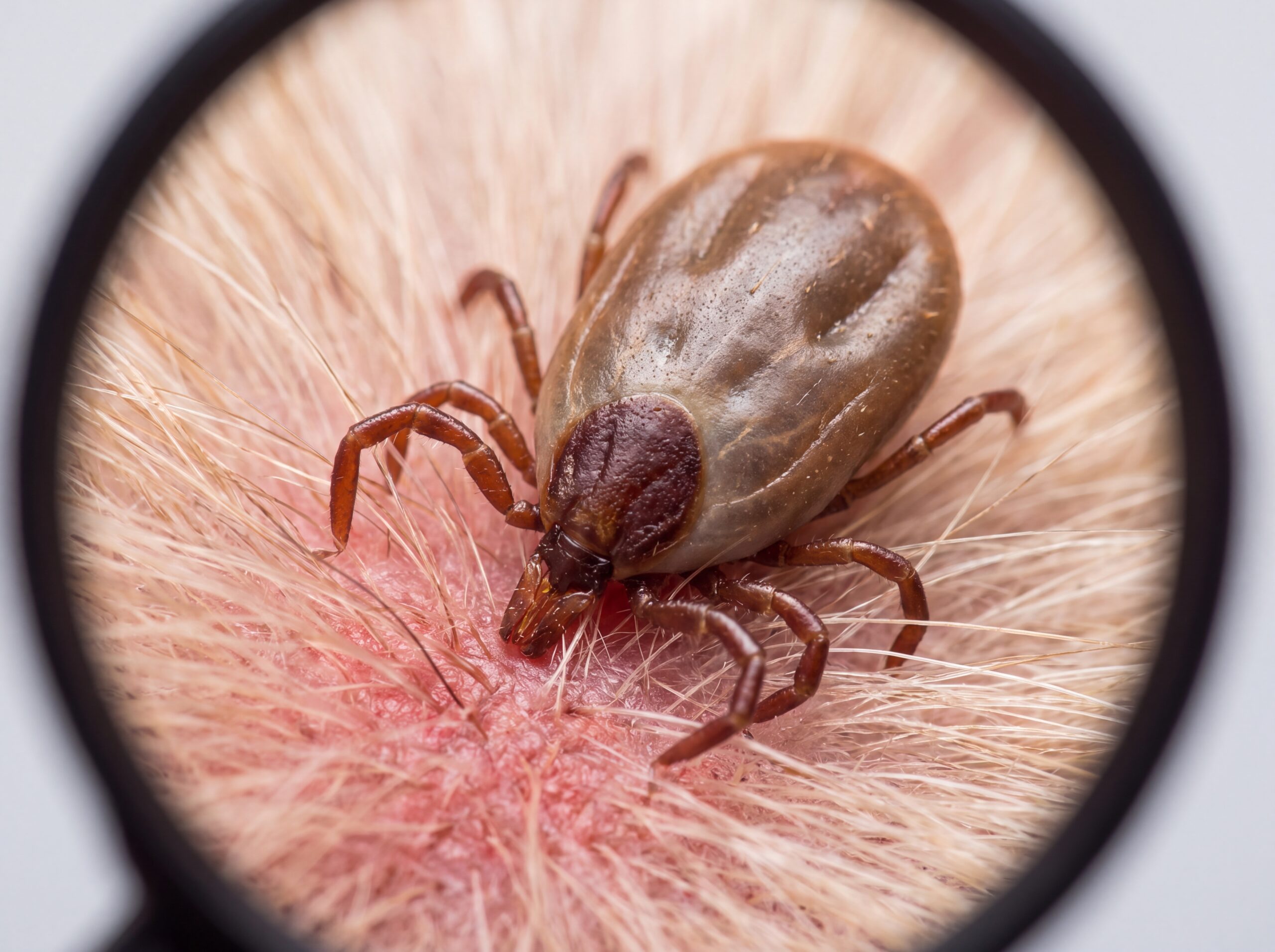
A tick feeding on skin, magnified
Life Cycle
Hard ticks develop through a three-host cycle: larvae feed on a first host, drop off to become nymphs, feed on a second host, then mature into adults that feed and mate on a third host. Ticks die shortly after laying eggs. Some ticks can survive up to two years without feeding, and soft ticks feed for under an hour while hard ticks may feed for days.

Photo: Habits and Where They're Found
Habits & Where They're Found
Ticks can't fly or jump; they crawl onto grass or brush and latch onto passing hosts, a behavior called questing. Once attached, they search for a warm, moist spot to feed, commonly the scalp, neck, or behind the ears and knees on people. Ticks are active year-round but become dormant below 45°F, and since they can't drink water, they need high humidity (85%+) to survive.
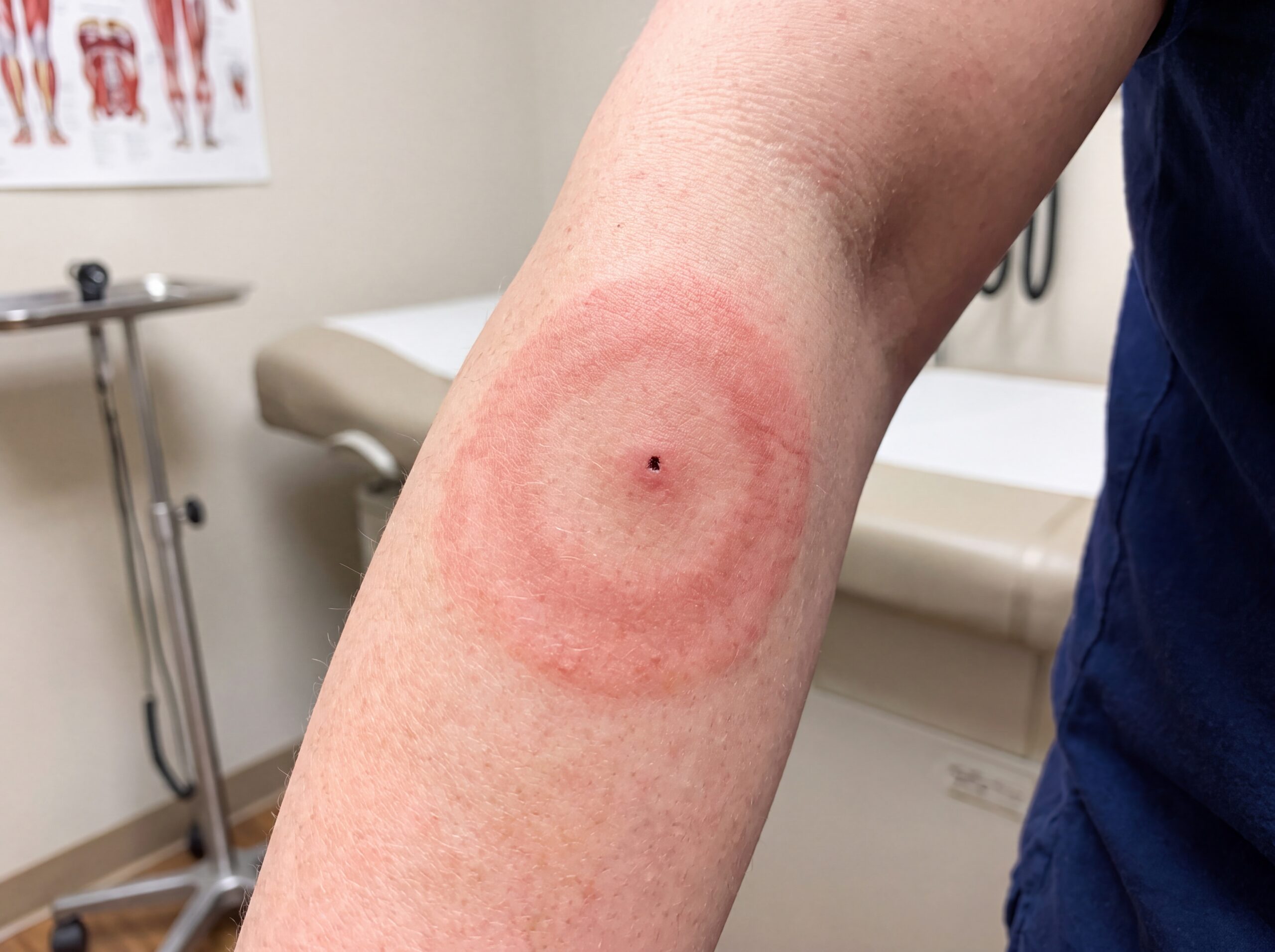
Photo: Why Ticks Are A Risk
Why Ticks Are A Risk
Ticks are the second-largest transmitter of disease to humans after mosquitoes. Depending on species, they can carry Lyme disease, Rocky Mountain spotted fever, tularemia, and several other bacterial and viral illnesses, and a single tick can transmit more than one disease during a feeding.
Signs You May Have Ticks
We do creepy so you don’t have to
Tell Us What You See
WE Take It From There
Mon–Fri 8am–5pm · Sat 8am–12pm · Serving San Diego, Orange County & the Inland Empire