
Pest ID Guide
Spiders
Most spiders you'll find in a Southern California home are harmless. A few, like the black widow, are worth knowing on sight.
Identification
Eight-legged arachnids. Most local species are harmless, though a few, like the black widow, are venomous.
Habitat
Build webs or hide in undisturbed corners, garages, woodpiles, and clutter both indoors and out.
Why They're A Risk
Mostly a nuisance, but a few species deliver medically significant bites.
Signs To Watch For
Webs rebuilding in the same spot, egg sacs, and sightings in garages or storage areas.
Species We Treat
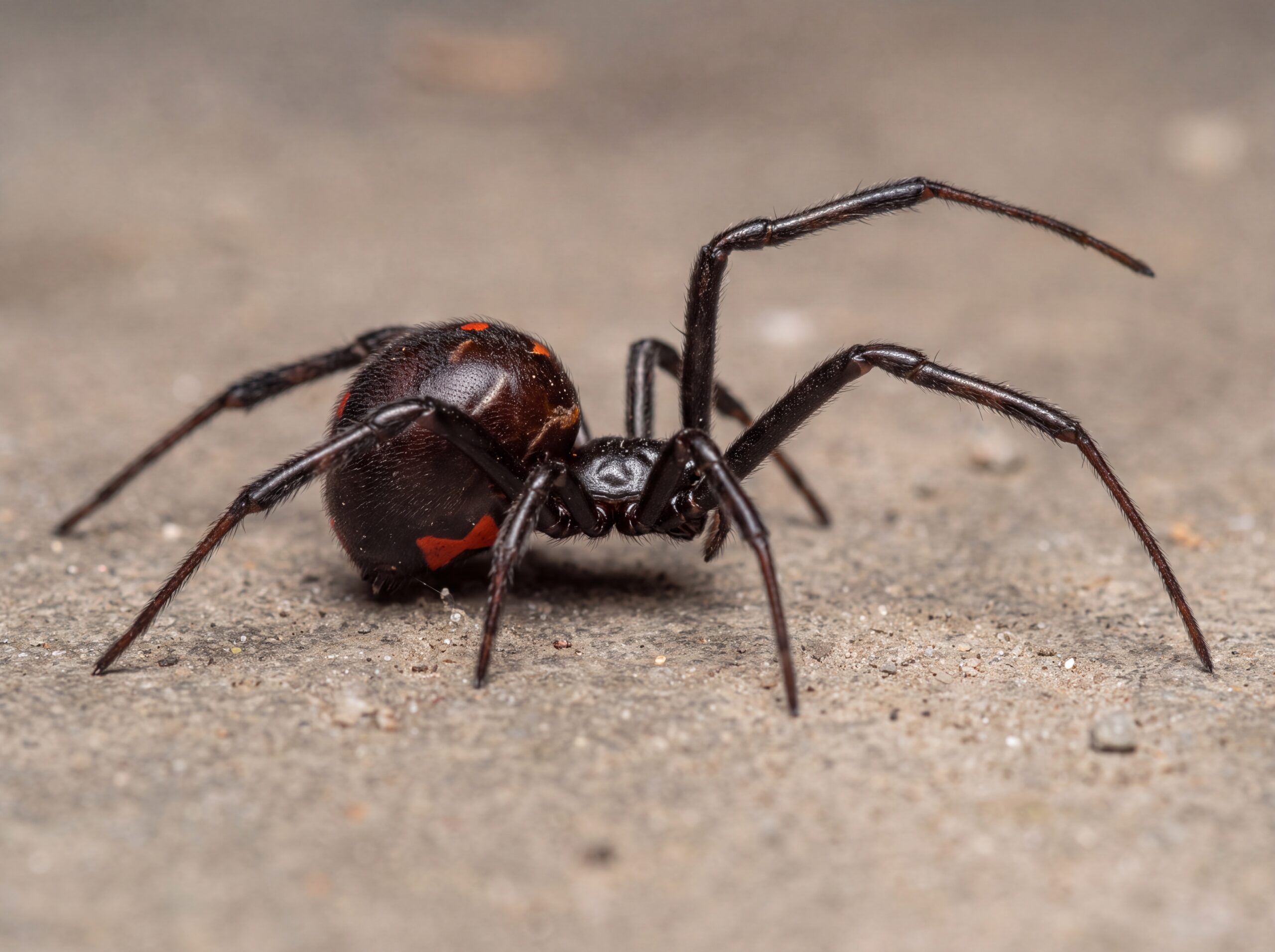
Photo: What Do Spiders Look Like?
What Do Spiders Look Like?
A spider's body has an abdomen and cephalothorax, eight legs, and an exoskeleton. Most have eight eyes, along with the mouth, fangs, and brain, all located in the cephalothorax. Spinnerets at the back of the abdomen produce the silk used for webs. Spiders don't have ears; leg hairs sense vibrations and smells instead. Size and color vary widely by species; most U.S. spiders run 1/4" to 1" long, with females typically larger than males.
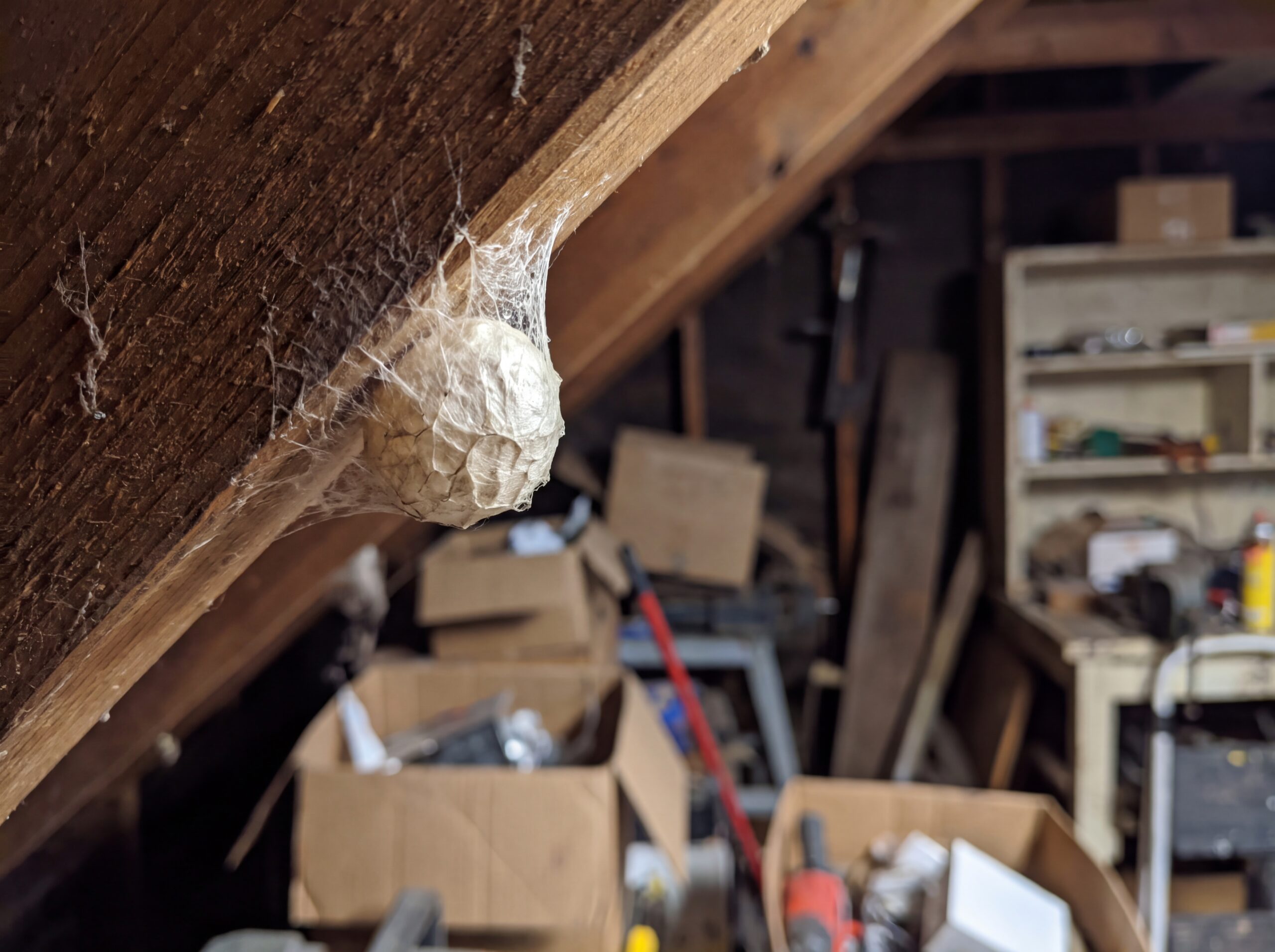
Photo: Life Cycle and Unique Characteristics
Life Cycle & Unique Characteristics
After mating, females create an egg sac holding as many as a thousand eggs, which hatch into spiderlings that molt repeatedly as they grow to full size. Female spiders typically live 1–3 years, while males often die within a few months. All spiders can spin silk, a fiber stronger proportionally than steel, though not all species build webs; some, like wolf spiders, hunt on or below ground instead.
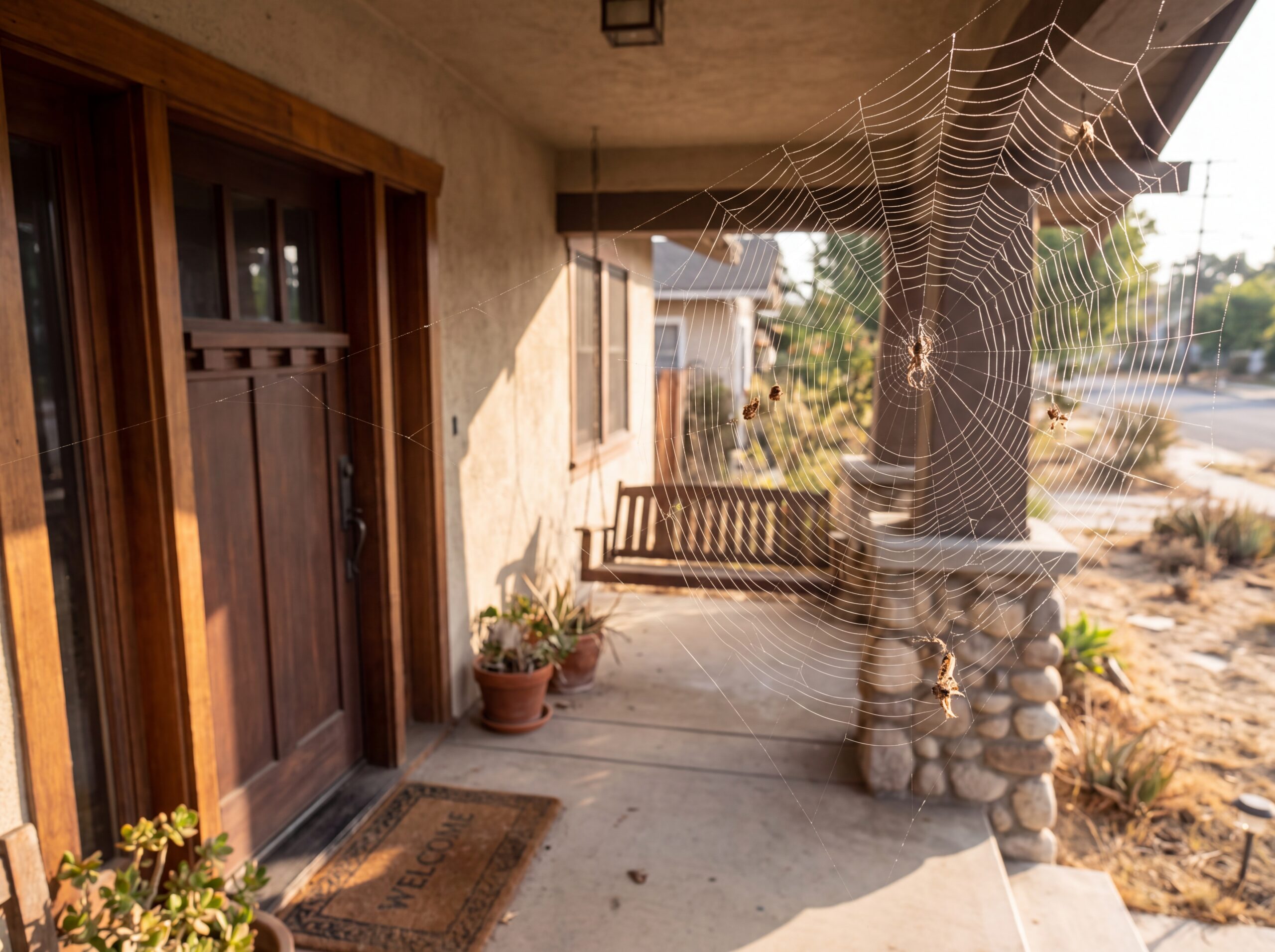
Photo: Habits and Where They're Found
Habits & Where They're Found
Spiders prey on insects and other small creatures, either trapping them in webs or hunting them down directly. They're not attracted to light, but the insects they eat are, so spiders often turn up near light sources. Indoors, they favor quiet, cluttered spots: closets, basements, garages, storage boxes. Outdoors, they hide in woodpiles, under rocks, and in vegetation.
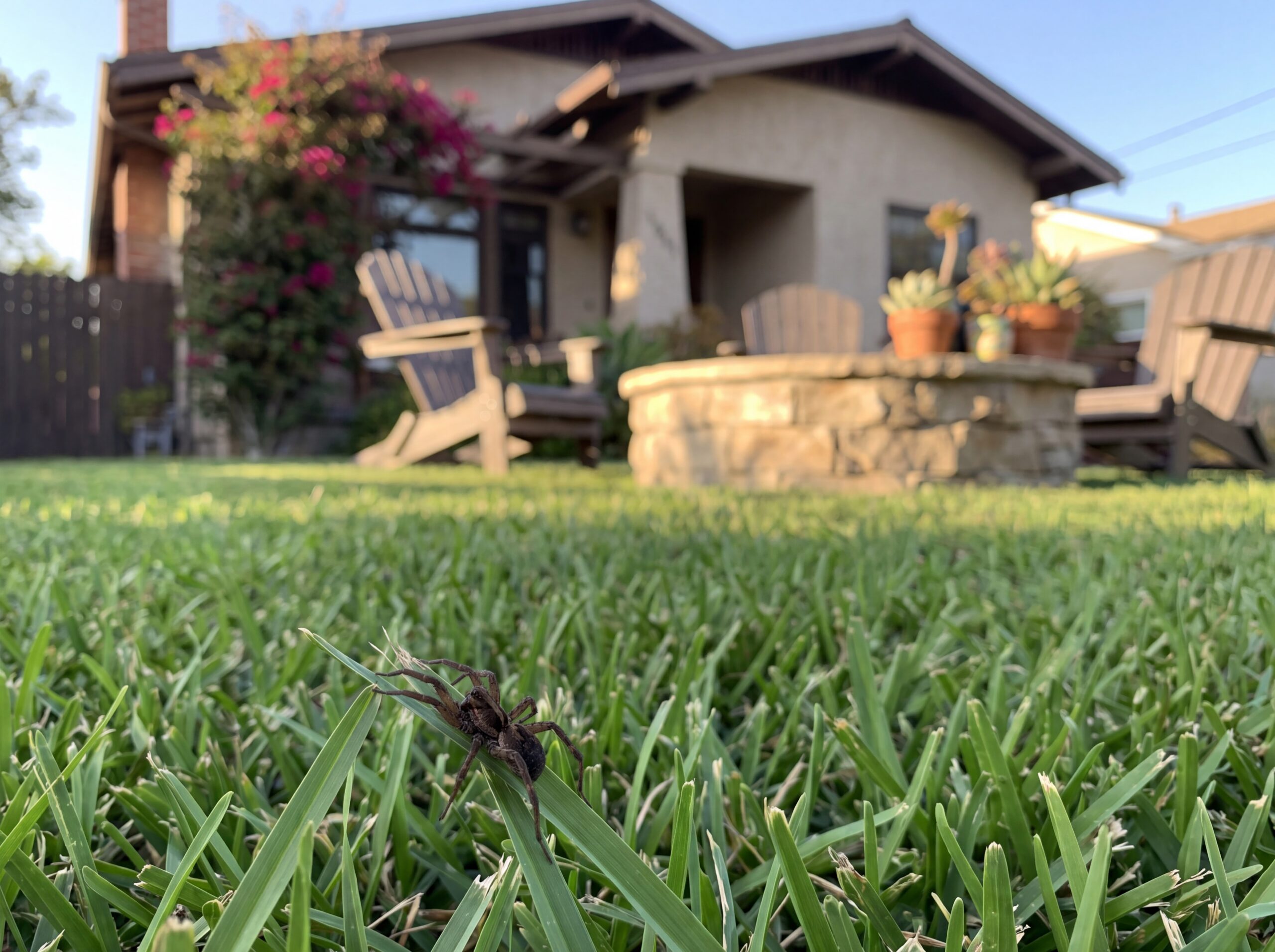
A spider on a lawn near a home
Why Spiders Are A Risk
Most spider bites are mild, but symptoms can range from swelling and itching to, in rare cases with venomous species, muscle cramping, nausea, or tissue damage around the bite. Bites can also trigger allergic reactions.
Signs You May Have A Spider Problem
We do creepy so you don’t have to
Tell Us What You See
WE Take It From There
Mon–Fri 8am–5pm · Sat 8am–12pm · Serving San Diego, Orange County & the Inland Empire