
Pest ID Guide
Fleas
Small, fast, and hard to see, fleas ride in on pets and wildlife and can turn a yard problem into an indoor one quickly.
Identification
Tiny, reddish-brown, and wingless. They jump rather than fly and move fast through fur or carpet fibers.
Habitat
Pet bedding, carpet, and shaded yard areas where pets or wildlife rest.
Why They're A Risk
Bites are itchy and can trigger allergic reactions in pets and people. Populations grow fast once established indoors.
Signs To Watch For
Pets scratching more than usual, small bites around the ankles, and tiny dark specks (flea dirt) in bedding or carpet.
Species We Treat
Fleas
There's only one flea species behind nearly every infestation in homes: the cat flea (Ctenocephalides felis). Despite the name, it's the primary flea affecting cats, dogs, and people alike.
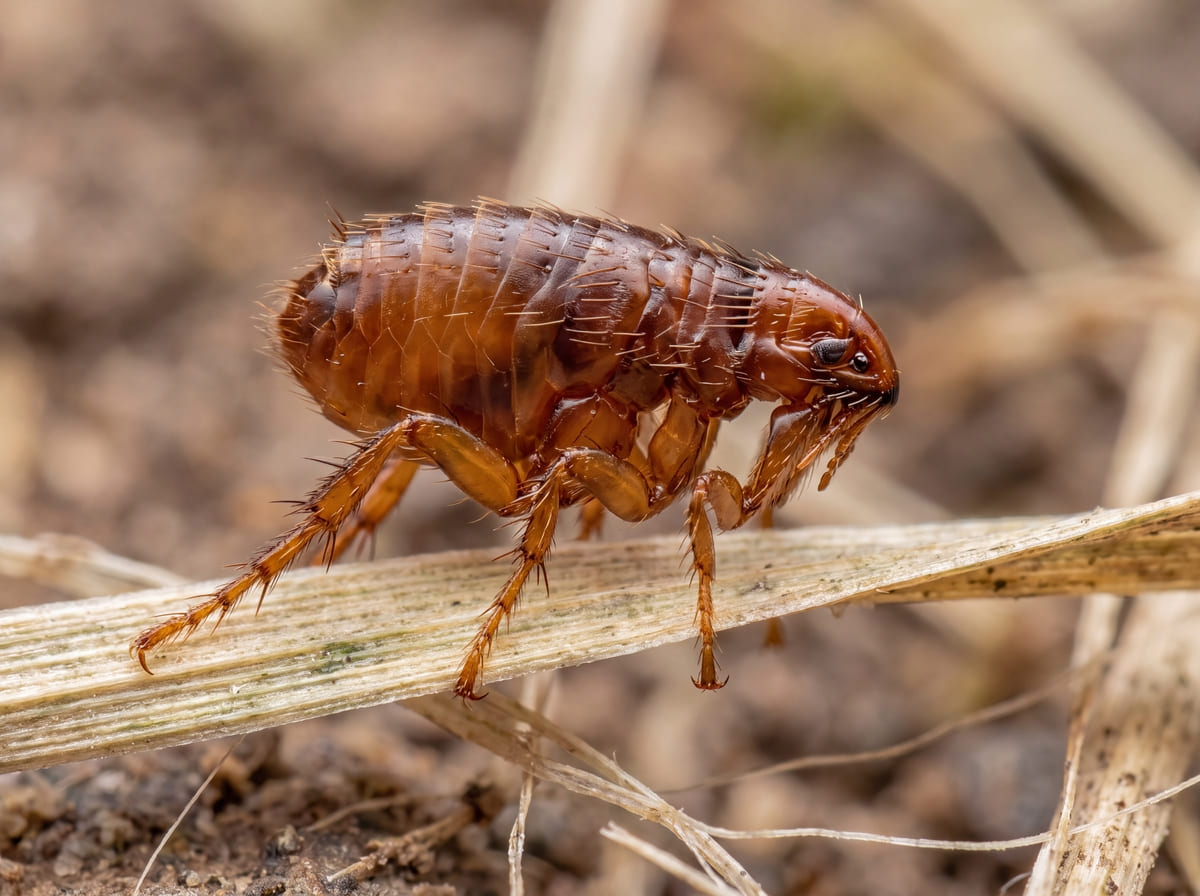
Photo: What Do Fleas Look Like?
What Do Fleas Look Like?
Fleas are dark, reddish-brown insects that grow up to 1/6" long, about the size of a sesame seed. Their flattened bodies are covered in hard scales and tiny hairs that help them grip a host, and long back legs let them jump up to 13 inches horizontally and 7 inches vertically.
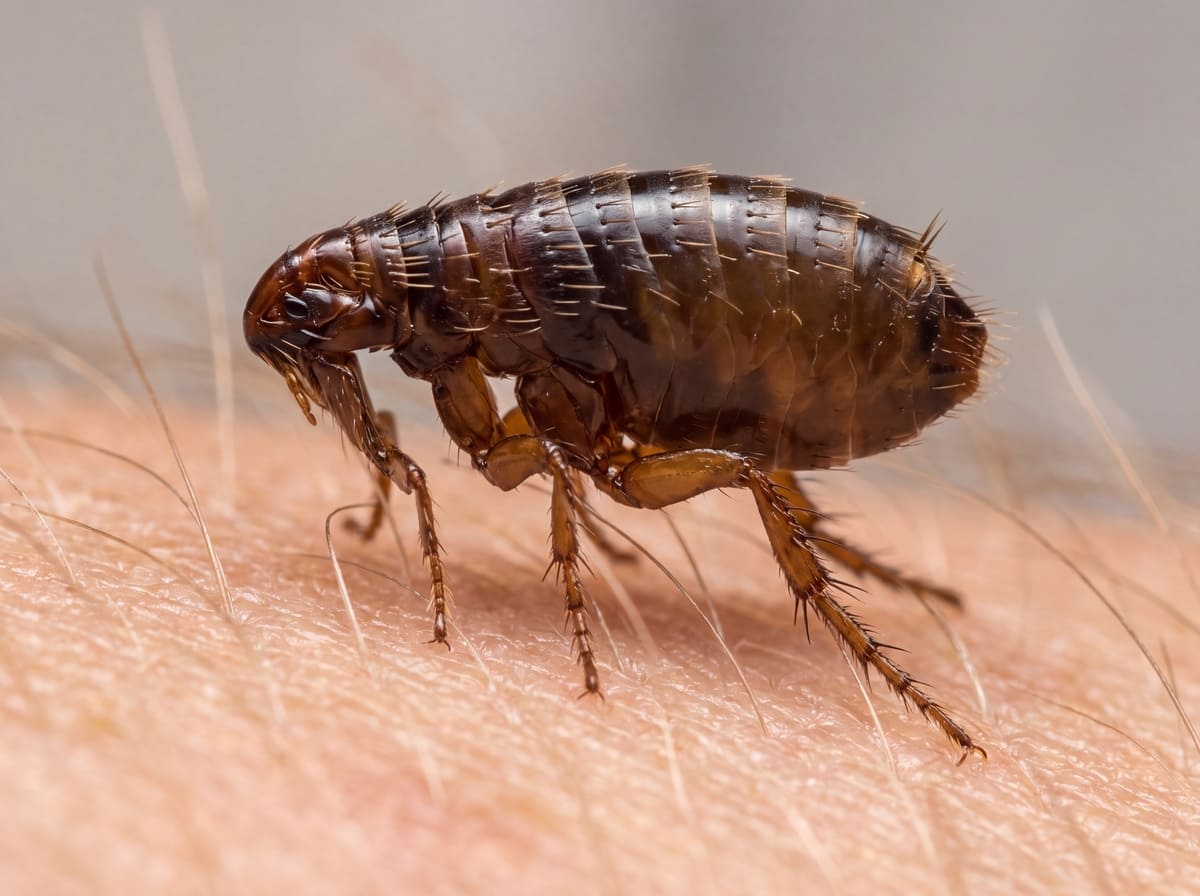
Photo: Life Cycle
Life Cycle
Fleas go through four life stages: egg, larva, pupa, and adult. A female lays 40-50 eggs on her host, but the eggs typically fall off and develop wherever they land. Eggs hatch into larvae within a week, spin cocoons about a week later, and emerge as adults after a couple more weeks. The full cycle can take as little as two weeks or as long as two years depending on conditions, and a single female can lay 2,000 eggs over her lifetime.
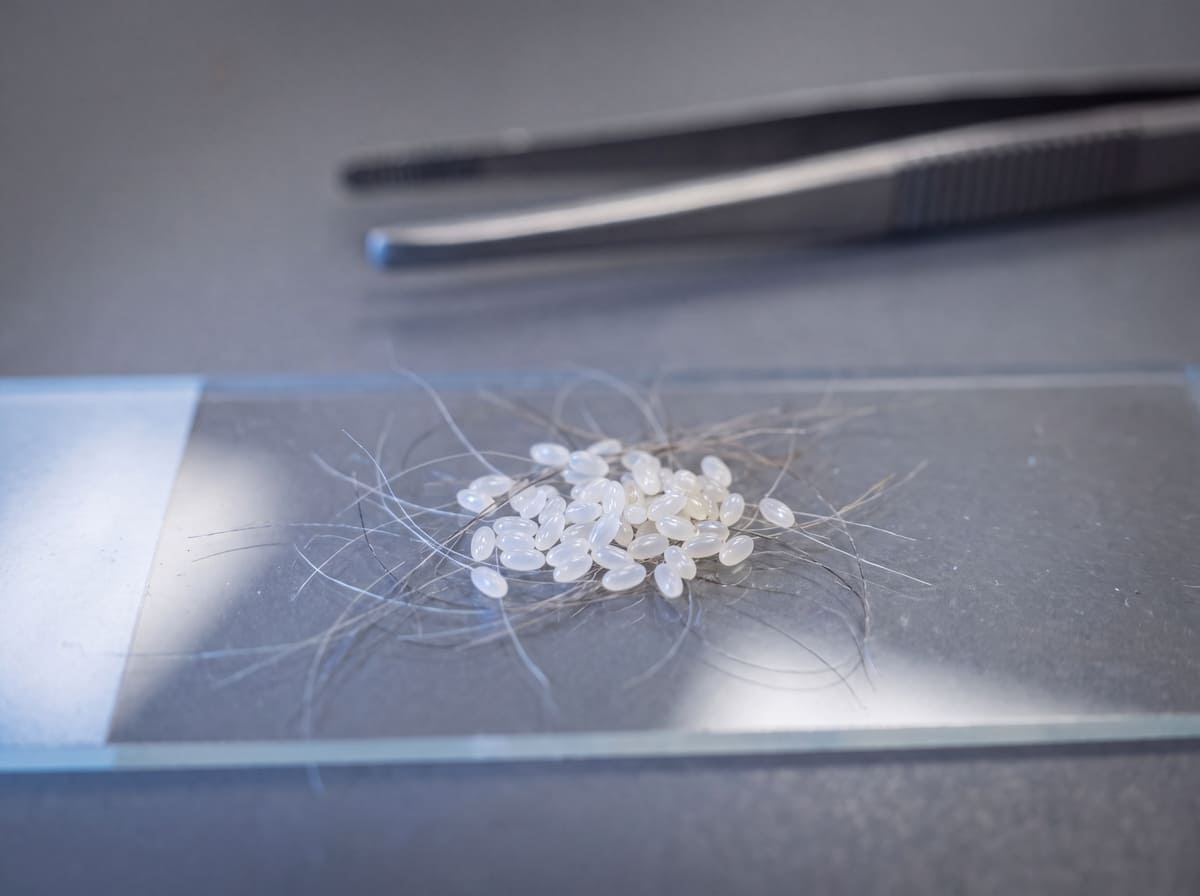
Photo: Habits and Where They're Found
Habits & Where They're Found
Fleas feed exclusively on blood and thrive in warm, humid conditions, multiplying faster as humidity rises. Once a flea finds a host, it can stay for a couple of months, feeding repeatedly. Indoors, fleas burrow into carpeting, furniture, pet beds, and clothing, anywhere they can develop undisturbed.
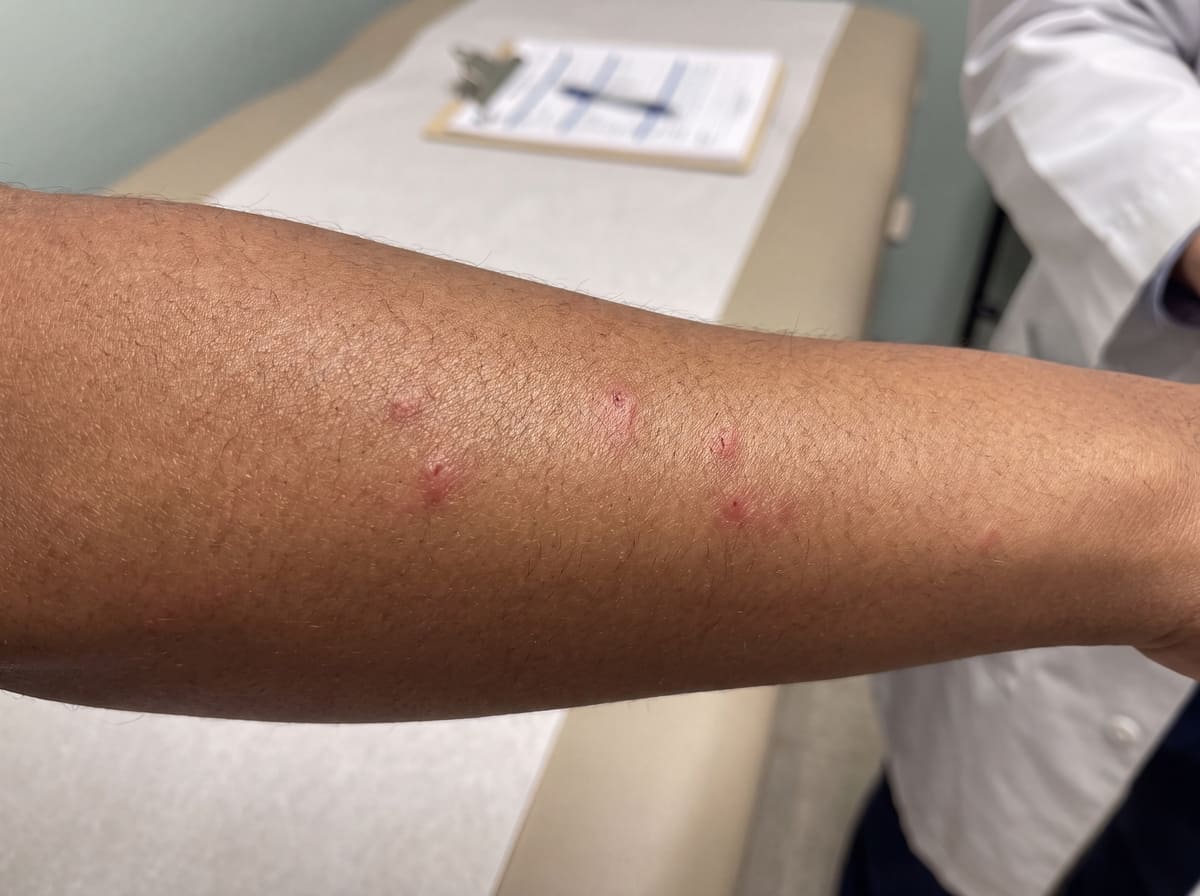
Photo: Why Fleas Are A Risk
Why Fleas Are A Risk
Flea bites inject saliva that causes itchy, irritated bumps, and scratching can lead to secondary skin infections and hair loss. Fleas can also transmit tapeworm and other parasites, and left untreated, infestations can escalate quickly given how fast fleas reproduce.
We do creepy so you don’t have to
Tell Us What You See
WE Take It From There
Mon–Fri 8am–5pm · Sat 8am–12pm · Serving San Diego, Orange County & the Inland Empire