
Pest ID Guide
Termites
Two types of termites cause nearly all termite damage in Southern California homes: subterranean and drywood. Knowing which one you have changes how it gets treated.
Valid Thru Dec 31, 2026
Identification
Pale to dark depending on species. Two types cause nearly all termite damage in Southern California: subterranean and drywood.
Habitat
Subterranean species nest in soil and travel to wood through mud tubes. Drywood species infest dry wood directly, with no soil contact.
Why They're A Risk
Termites cause more structural damage nationally than fire and storms combined, and it often goes unnoticed until it's severe.
Signs To Watch For
Mud tubes, hollow-sounding wood, discarded wings, and frass that resembles sawdust.
Species We Treat
Drywood Termites
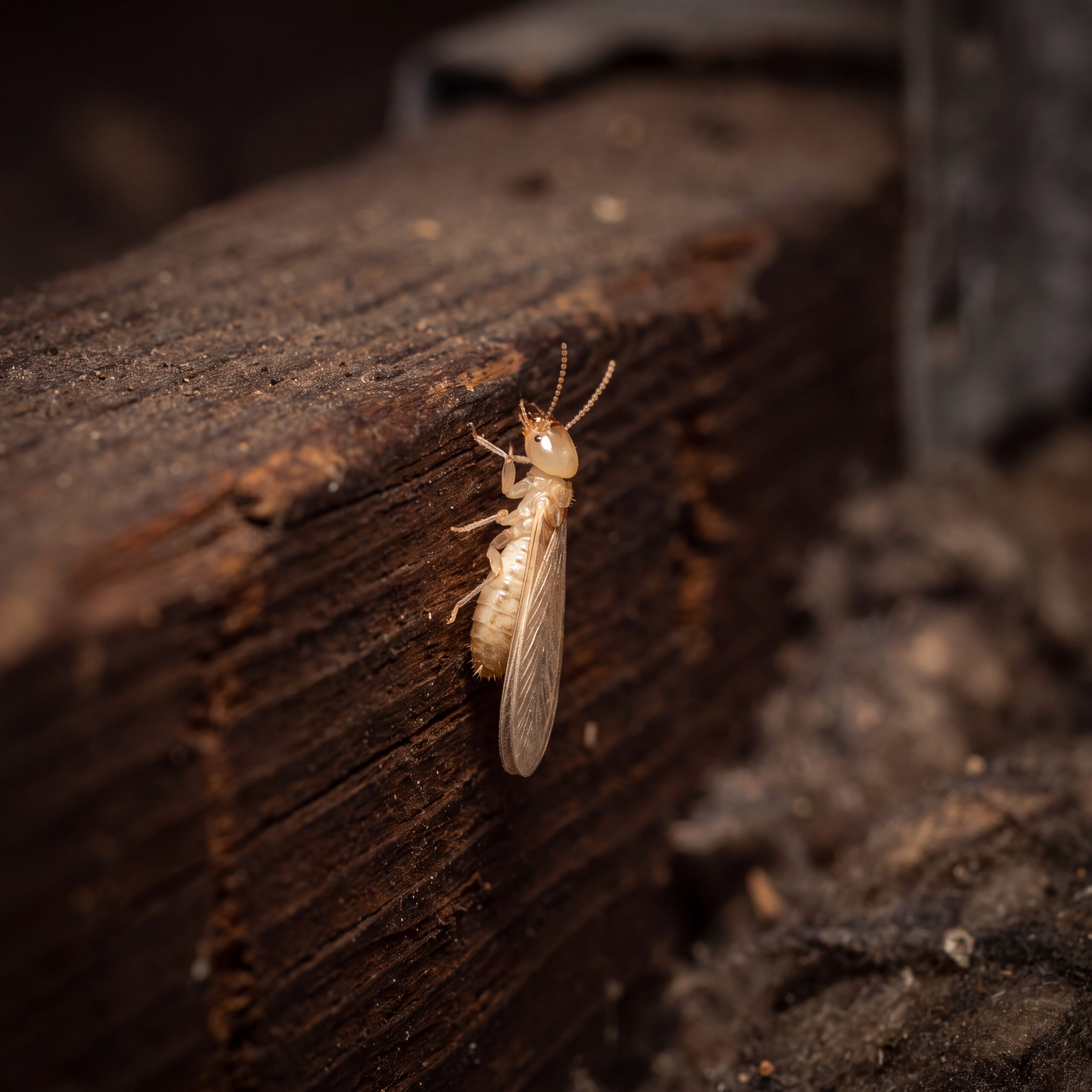
Photo: termite close-up / winged reproductive
What Do Termites Look Like?
A termite's body has a head, thorax, and abdomen. Unlike ants, which they're often confused with, termites have no narrow waist and their antennae don't bend. Reproductives, the caste responsible for starting new colonies, are darker and have two pairs of wings for flight; they can grow to an inch long, though most termites are only 1/4" to 1/2". Soldiers have large, dark heads and strong mandibles for defense. Workers are pale and smaller, built for eating through wood and building tunnels.
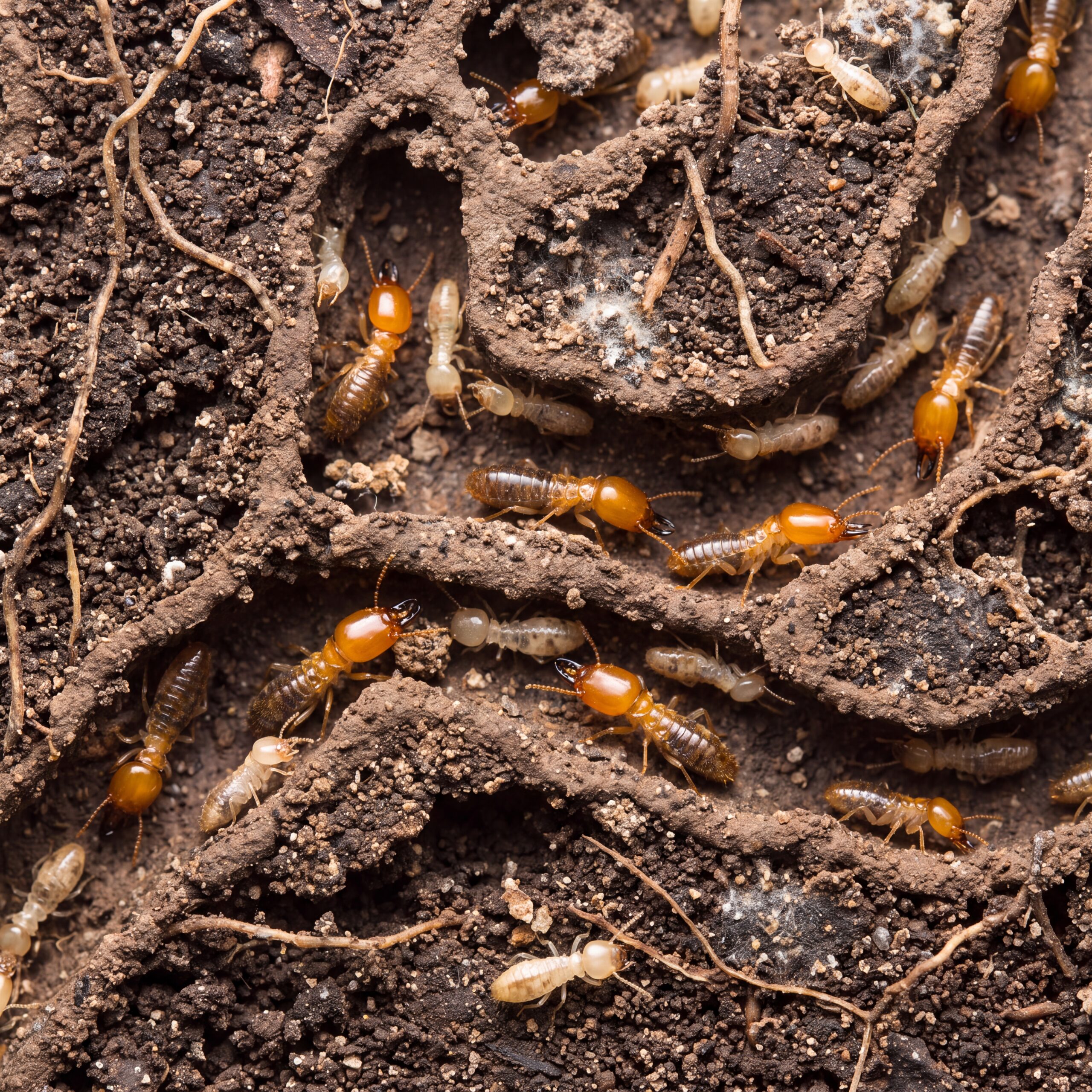
Worker and soldier termites in an underground mud tunnel
Colony Structure & Termite Life Cycle
Termites live in colonies organized into castes: reproductives (a king and queen, who can lay a thousand eggs a day), soldiers (who defend the nest), and workers (who feed the colony and dig tunnels). A mature subterranean colony typically holds around 60,000 termites, though some grow past 2 million; drywood colonies stay smaller, usually under 5,000. In spring and early summer, reproductives swarm to find mates and start new colonies, then shed their wings once settled.
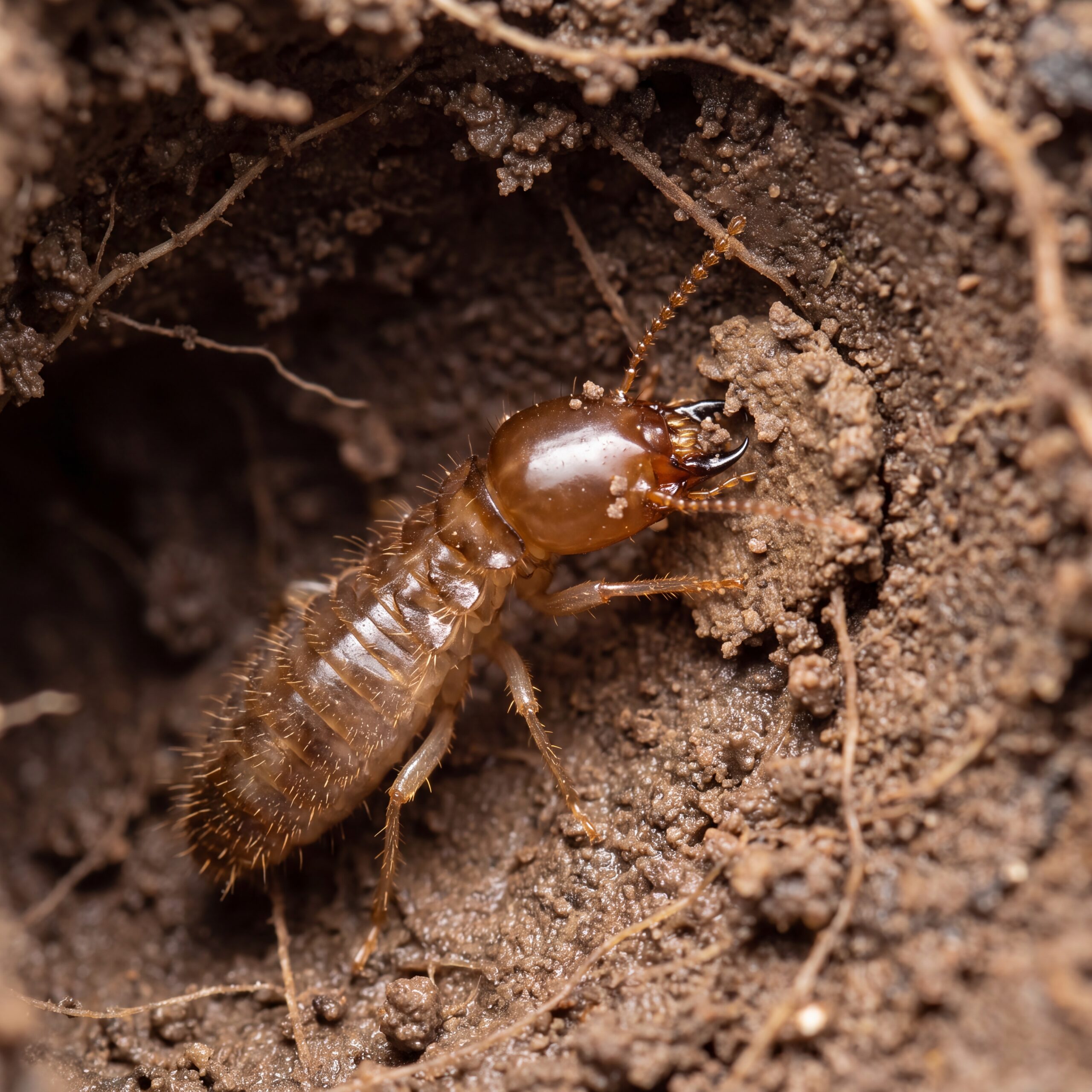
A soldier termite guarding a tunnel entrance in soil
HABITS & WHERE TERMITES ARE FOUND
Termites feed on cellulose around the clock regardless of weather, though swarming season peaks in spring and summer. Because most termites are blind, they communicate through pheromones and by beating their heads against tunnel walls to signal danger. Subterranean termites nest in soil and cause about 75% of home termite damage; drywood termites infest dry wood directly with no soil contact and are common in attics, framing, and furniture along the coast.
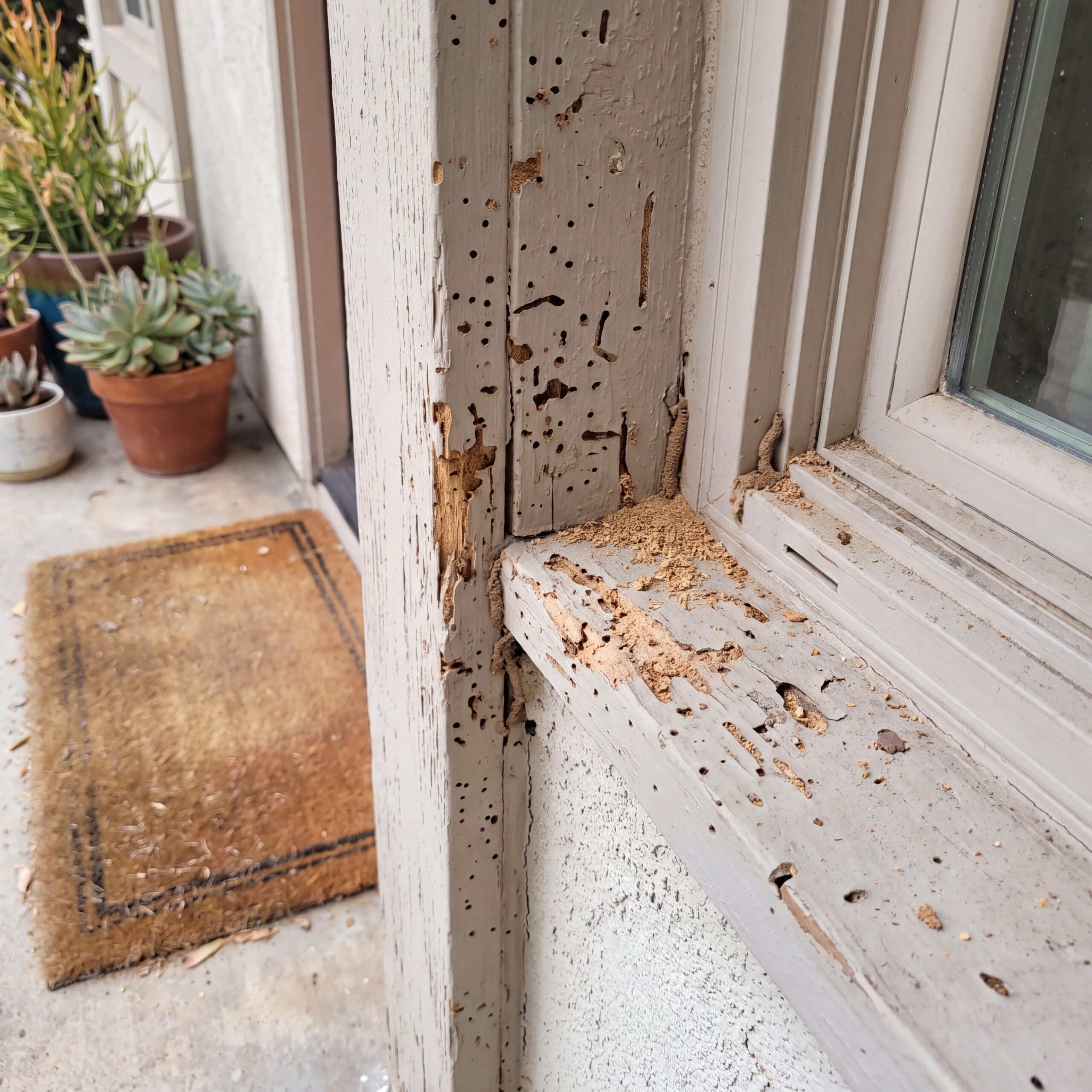
Photo: termite structural damage
Why Termites Are A Risk
Termites cause an estimated $5 billion in property damage annually in the U.S., and nearly one in every 25 homes has a termite problem. Because they feed continuously and often go undetected, damage can compromise a structure's integrity well before it's discovered.
Signs You May Have Termites
We do creepy so you don’t have to
Tell Us What You See
WE Take It From There
Mon–Fri 8am–5pm · Sat 8am–12pm · Serving San Diego, Orange County & the Inland Empire